PGA of America brings 31,000 golf professionals to players and their AI assistants
B2C
Sports
ChatGPT App & MCP App
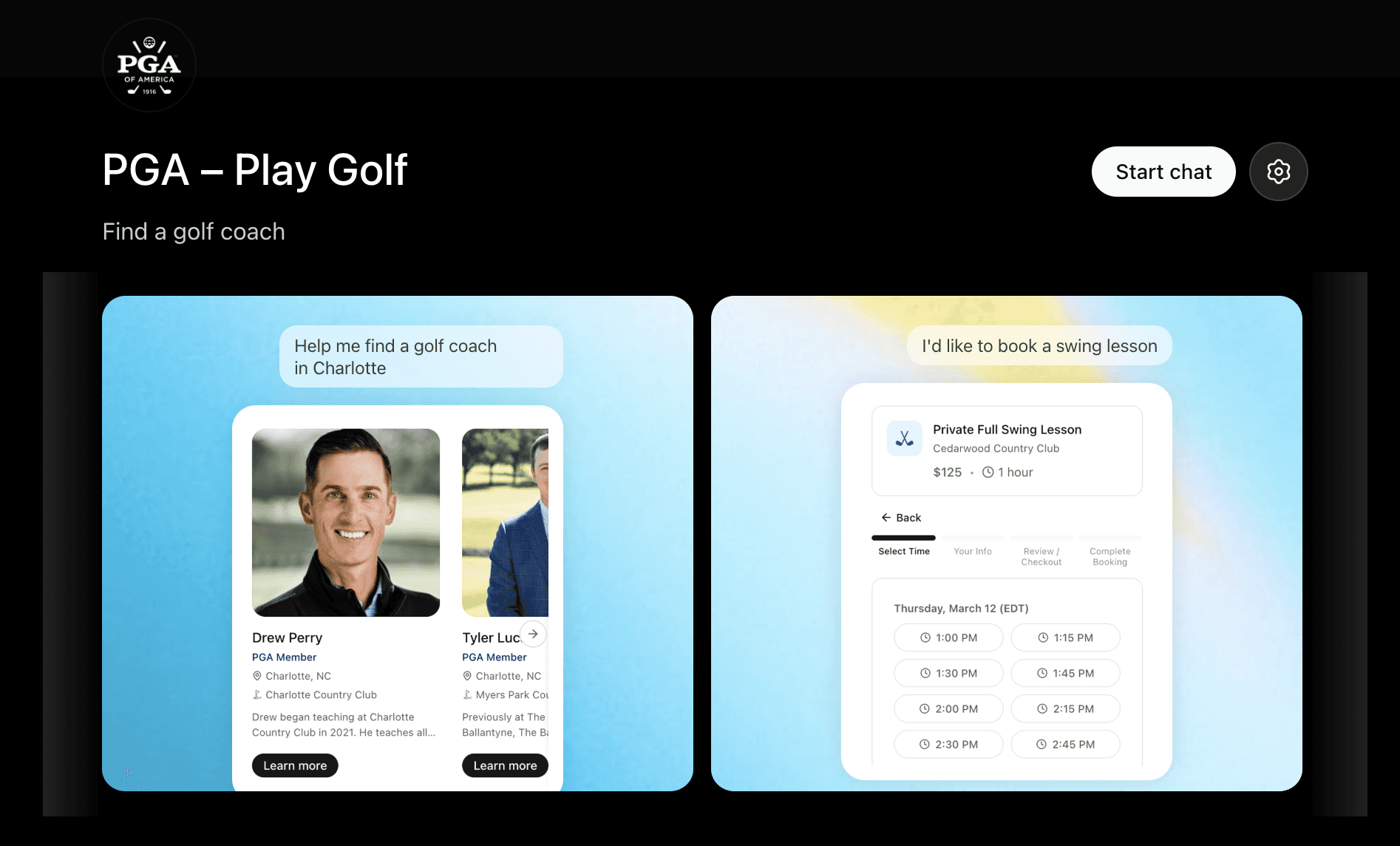
PGA of America built an MCP app so that players can search and book lessons with its certified golf professionals via ChatGPT, Claude, and other AI assistants. The team chose Alpic's Skybridge framework to ship a React-based app fast, with an optimized build pipeline.
The challenge: connect new golfers with a real expert
In recent years, golf has seen a global resurgence in popularity. At least 3 million Americans have hit the green for the first time in every year since 2020, according to the National Golf Foundation. Many of them are learning by trial and error: a tip from a friend, a video, or just figuring it out as they go along. PGA of America saw an opportunity to connect these new enthusiasts with a local PGA professional, the person best suited to teach them the basics and help them improve with confidence.
AI agents can already search for local golf academies through organic search, but their instructors may not have the same level of expertise as a PGA of America Golf Professional. PGA of America wanted to offer a more curated, qualitative approach: a way for an agent to point a golfer to one of its more than 31,000 certified professionals. It saw this approach as a natural extension of PGA Coach, a program that allows golfers to discover and book lessons with PGA Members on PGA.com.
“We wanted the PGA – Play Golf MCP app to provide agents with a curated list of the best golf professionals who teach people to play the sport.”
— Michael Gyarmathy, Principal Engineer, PGA of America
Why Skybridge
PGA of America began building their first MCP Server in July 2025, aiming to be among the first sports organizations listed as the official MCP registry came online in 2025. When OpenAI announced the ChatGPT app store later that year, the team saw a great opportunity to bring its server and additional UI components to a platform trusted by over a billion users every month.
React was the stack the team knew best, which raised a question familiar to anyone shipping a UI inside an MCP server. React components have to be compiled and then embedded in the HTML the server returns to the client, and standing up that pipeline, then rerunning it on every change, turns into its own project.
“Shipping React inside an MCP App requires configuring build tooling to compile and serve those assets properly. I came across Alpic while searching for a solution, and the developer experience on their Skybridge framework won me over.”
— Michael Gyarmathy, Principal Engineer, PGA of America
Skybridge is a fullstack framework. Tools and widgets are declared server-side through skybridge/server, which extends the MCP SDK, and the skybridge/web hooks consume those declarations with tRPC-style inference from server to widget, so types carry through to autocomplete in the component. The hooks follow React Query conventions (isPending, isError, callbacks), patterns any React team will recognize.
For teams working with agents, Skybridge ships with a skill that walks a coding agent through idea validation, UX, and tool design before scaffolding the project.
The rest of the framework is the loop around that code. Running skybridge dev launches devtools with a dedicated panel for views, a mobile preview, and Vite hot module reloading, so a widget change appears without rebuilding or reinstalling anything. Local work that once meant several commands alongside a separate MCP inspector runs through one toolkit.
The same toolkit reaches past local development into testing and audit. Alpic’s tunnel exposes the local server at a stable, authenticated URL for testing against a live client, and its Beacon audit tool scans the app against store requirements before it goes for review. Skybridge covers the path from idea to production app without leaving the toolchain, which for PGA's team meant more focus on the end-user experience rather than on the pipeline underneath it.
What's live today
The PGA Play Golf MCP server exposes three tools, allowing the player to:
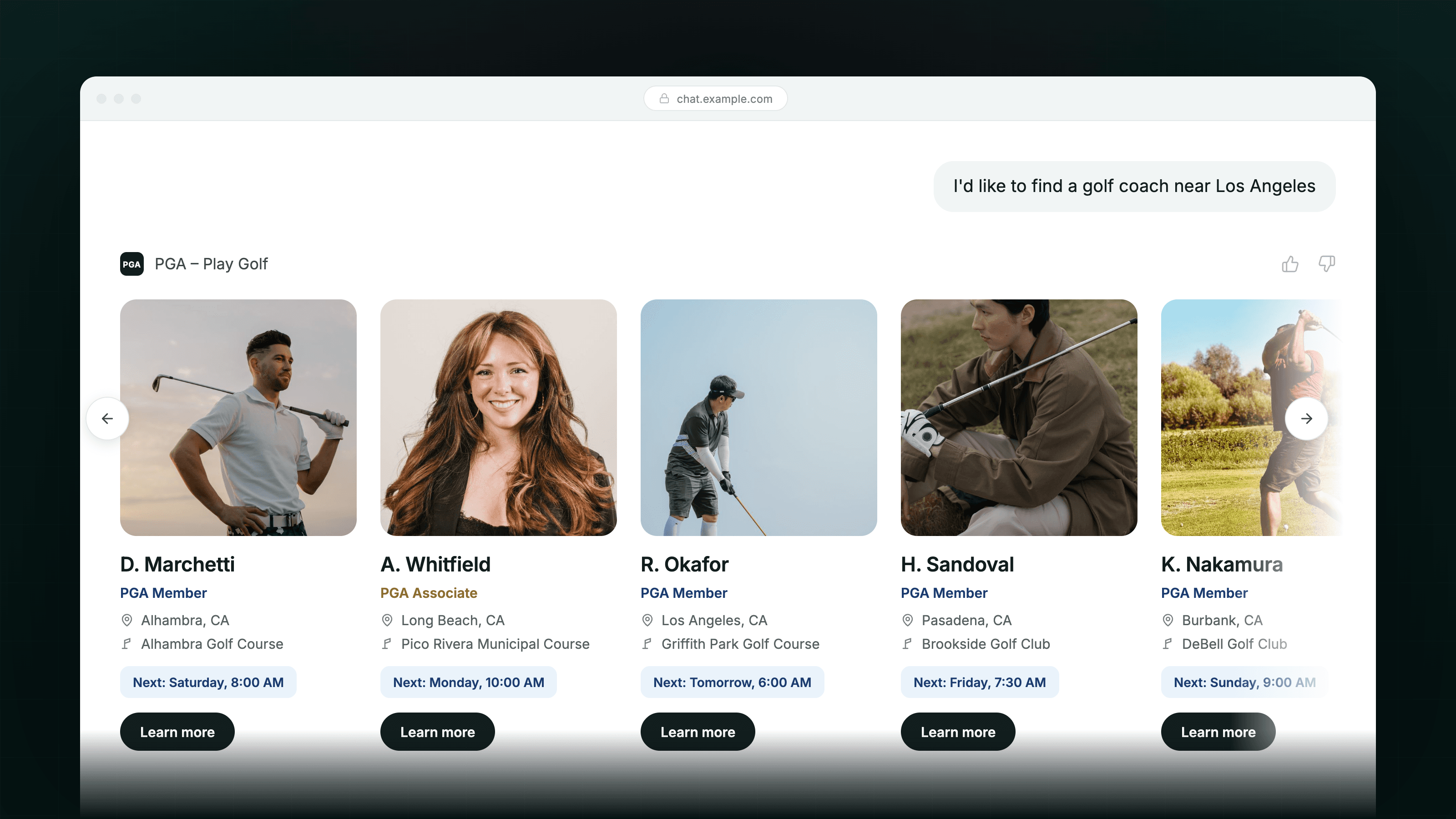
Search bookable golf coaches near a location with profiles, pricing and next availability.
Get a specific coach's offerings and open time slots.
Book a lesson directly from the chat.
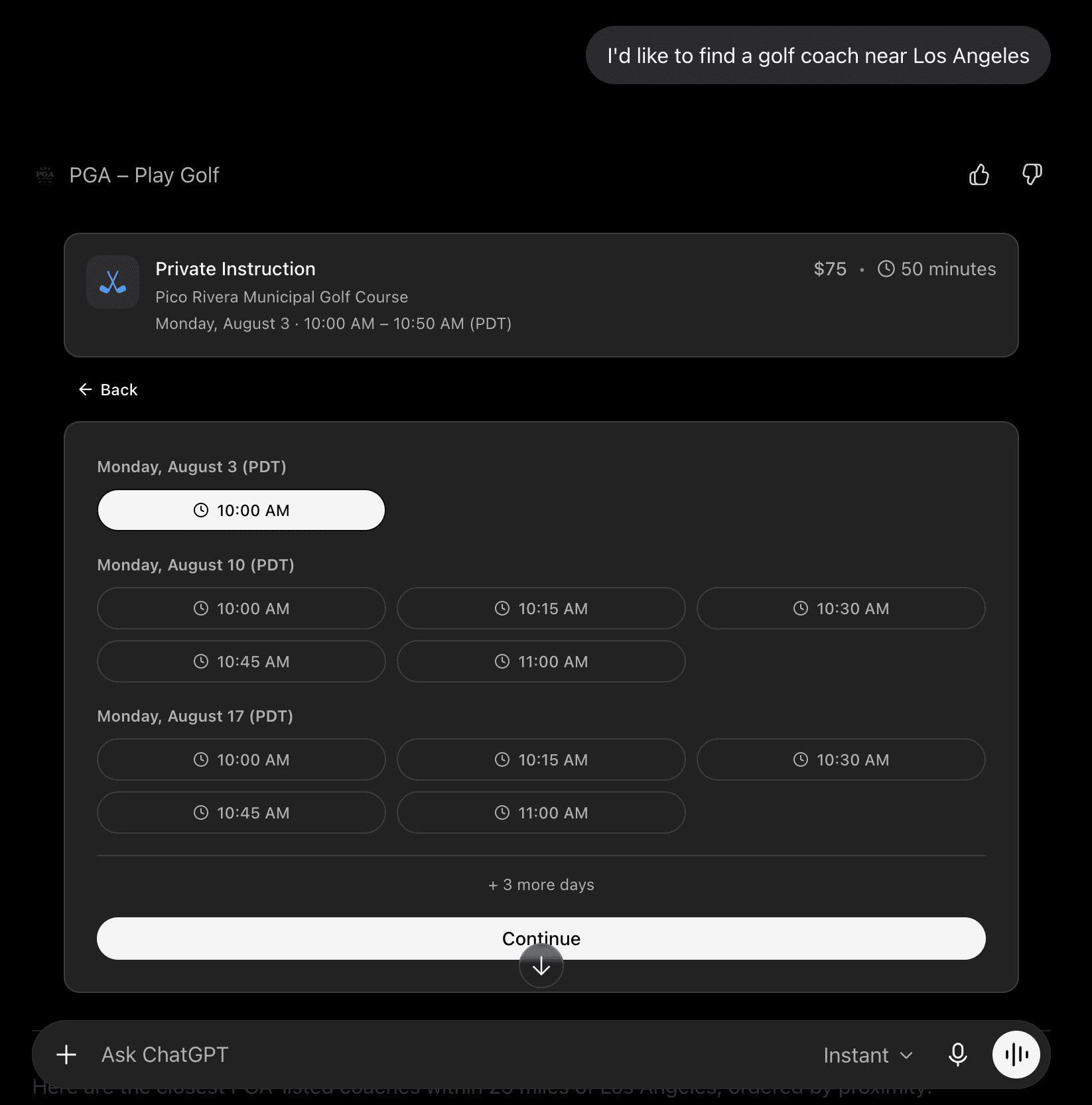
It is listed in both ChatGPT and Claude.
Looking ahead
PGA of America's engineering team keeps reaching for Skybridge as they continue to enhance the booking experience via PGA – Play Golf. This includes introducing a mixed authentication flow that allows curious golfers to search and discover coaches anonymously, then be prompted to create an account to book their first lesson.
Golf happens outdoors, on grass, usually with someone standing nearby to watch and correct. An AI assistant may be able to tell a golfer everything it knows about fixing a slice and grab a list of schools in the users’ area. However, it doesn’t know which coaches have PGA credentials or who has Saturday morning free.
This pairing closes that gap. The model handles the conversation, picking up that the player is new and looking for someone close by, while the app supplies PGA of America's roster, each professional's offerings, and live availability, ending with a lesson on the calendar. That’s a powerful value proposition for both golfers and the organization, and the PGA team is already looking at what other new possibilities this channel can offer.
Liked what you read here?
Get our newsletter!