/
Basics
How Premium Fashion & Lifestyle Brands Can Win Inside AI Assistants

Why conversational commerce is becoming a new channel for discovery, styling, and conversion.
For years, discovery relied on search: a customer typed a query into Google, scanned a page of results, and picked a brand or article from the choices listed.
That habit is shifting. A growing share of consumers now begin that search inside a conversation, long before they ever reach a boutique or open a website, and ChatGPT alone fields an estimated 50 million shopping-related queries a day, making it one of the largest product-discovery surfaces anywhere and the fastest adoptions of a consumer tech in history.
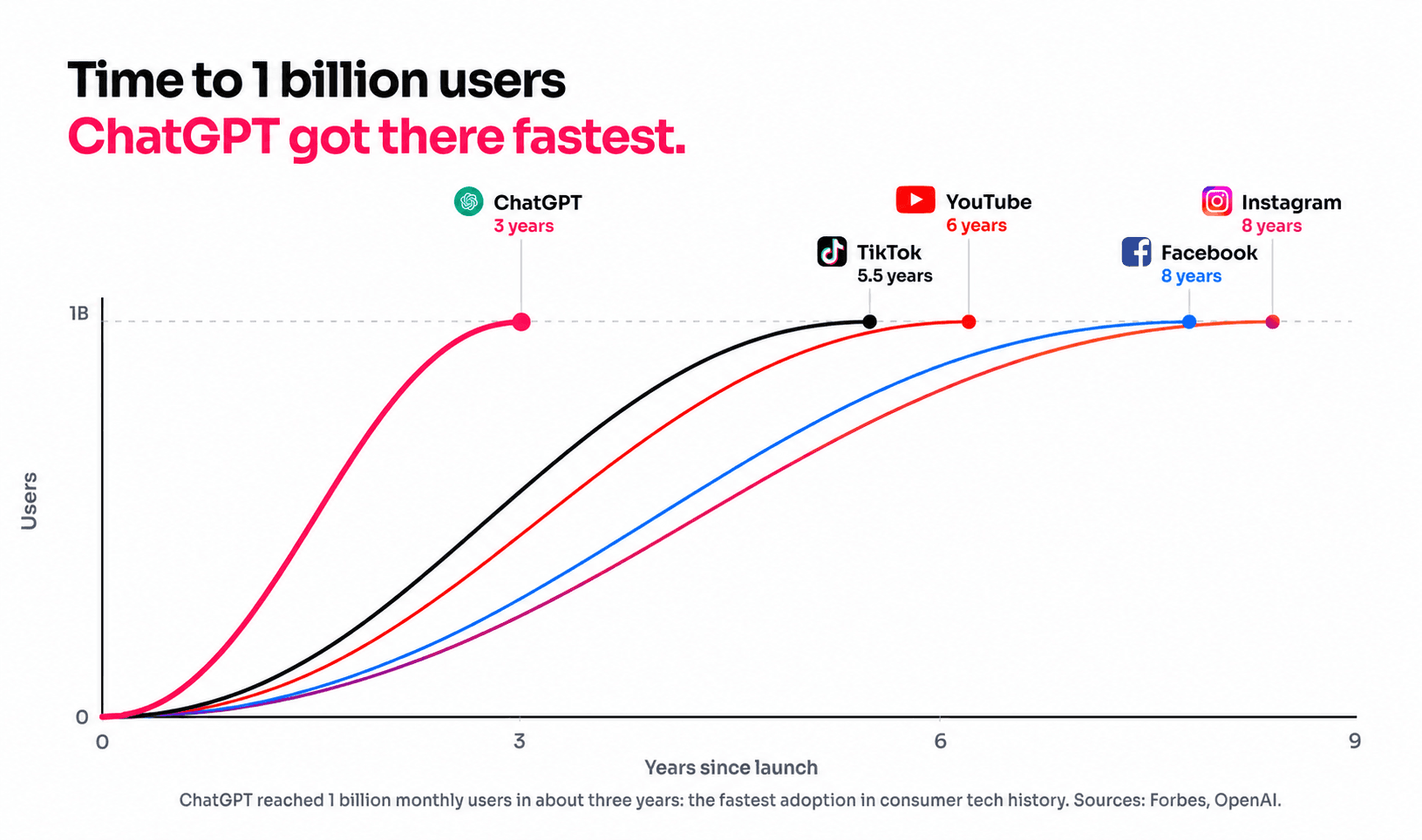
Premium fashion and lifestyle brands rely on a distinctive point of view and a carefully crafted experience. That's exactly what's at stake: the brief is no longer framed by a search engine, but by the assistant itself, which brands make the shortlist, which products get compared.
Right now, most brands only show up as a citation, a result pulled from the open web the way any search listing would surface it. But that's a limited position to hold: it either depends on links the brand doesn't necessarily control or reduces an entire collection to a bare product feed, without a voice, a style, or a story of its own.
Worse, a citation puts a brand one prompt away from direct comparison: a customer can simply ask the assistant to weigh a jacket against a rival's, price and features laid side by side, in the same breath. For a brand whose premium sits on more than just price, that's a dangerous position, an assistant that leads with "here's a cheaper alternative" undercuts the very positioning years of marketing were built to establish.
But the alternative already taking shape: one that promises a better experience for the customer, stronger conversion, and a real opportunity for premium fashion and lifestyle brands willing to move first.
Apps: bringing a brand universe inside the conversation
The difference is control. Instead of a citation, a brand gets a space inside the assistant it can design, stock, and speak through on its own terms.
In October 2025, OpenAI introduced apps inside ChatGPT: branded experiences that live natively inside the assistant rather than assembled from search results scraped across the open web. Claude has since built out its own connector directory, and Gemini has given glimpses of going down a similar path. The particulars still differ across platforms, but the direction and the underlying technologies that enable it do not. Thanks to a common standard for connecting AI with third-party services, each AI platform has opened the door to the conversation to brands in a very similar way to when Apple and Android released their app stores nearly two decades ago. An “app store” moment of sorts, for the conversation itself.
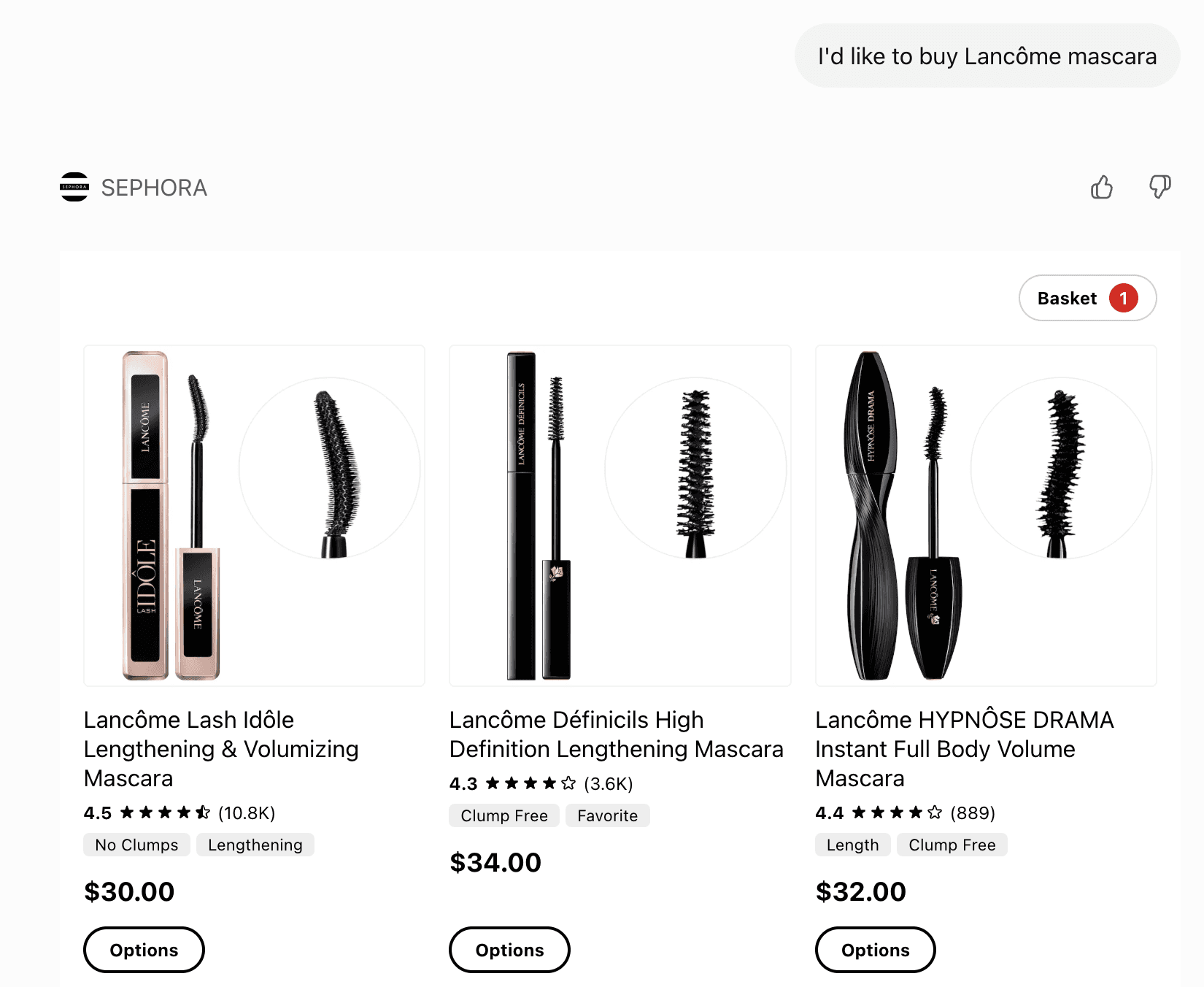
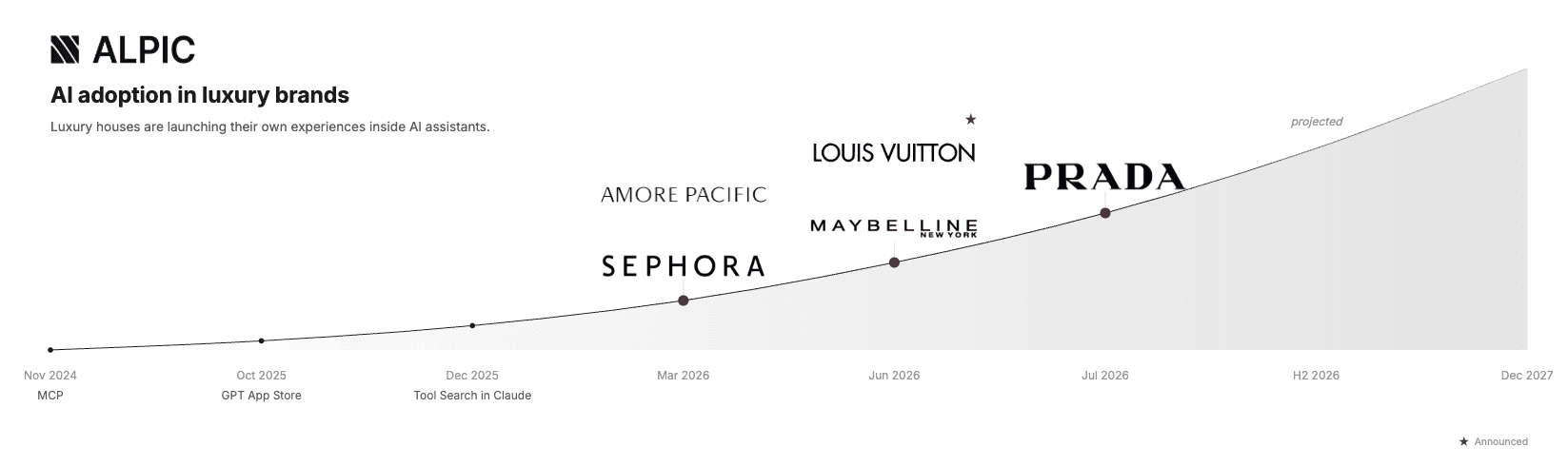
Louis Vuitton and Prada each recently launched a ChatGPT app. ASOS has an AI stylist for outfit discovery, and Sephora ties its assistant recommendations to its loyalty program, , a model other brands could use to turn casual browsers into repeat customers. But most of the visible examples so far come from luxury and beauty. That leaves a clear opening in premium fashion, where customers buy more often, compare more actively, and are already used to moving between inspiration, ecommerce, and physical stores.
Seizing this opening starts with understanding exactly what an app makes possible, piece by piece.
The anatomy of an app inside conversational AI
The brand’s visual identity
Apps inside AI assistants can be personalized according to the brand’s visual identity. This includes fonts, colors, and buttons, but also advanced layout options including carousels and product cards, full-screen takeovers, embedded video, and interactive maps. A brand can stage its own presentation and infuse the experience with the identity that consumers trust.
A voice of its own
With an app, a brand can instruct the model directly, setting the vocabulary it reaches for, the register it holds, the way it addresses a customer, so an exchange carries the brand's sensibility rather than an assistant's flattened, default tone.
A direct line into its inventory
An app is connected directly to the brand’s catalogue, so what a client sees reflects real stock rather than whatever a web search happens to return. The same is true of the story around a product: an app can draw on the brand’s own account of a collection, not having to rely on a social media thread or a forum's best guess.
From product search to personal styling
Above bringing a brand’s existing universe inside the chat, apps bring the promise of a new kind of relationship that traditional search and websites couldn't offer before.
A large language model can act as a stylist, an advisor, or simply a sounding board to think out loud with. If a consumer asks "Build me a day-to-evening look around this blazer," it can turn that piece into a complete look, adjusted for taste, budget, and dress code, checked against the live catalog so every recommendation can actually be bought: the right size and color, a near
by store, or a credible alternative if something's out of stock.
That same assistant is available at any hour, in any language, holding a request a store associate would otherwise only reach on a slow afternoon. It can open a product page, build a basket, or route a high-value customer to a human stylist, merging physical and digital into one journey.
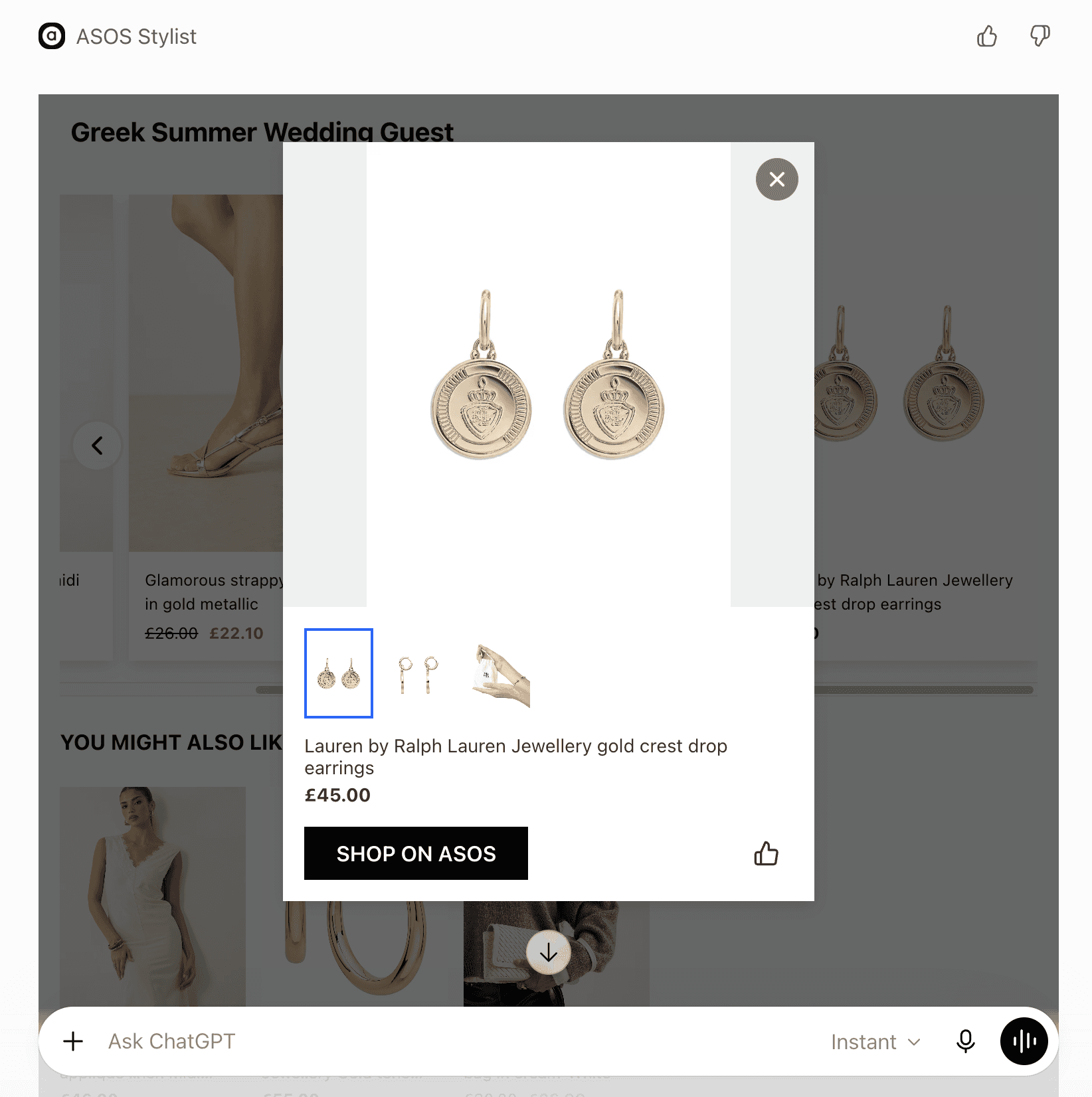
Asos GPT APP allow the client to shop from the conversation
That's real leverage over conversion and order value, but the deeper shift is the relationship itself: part guidance, part company, at a scale no website or associate could match.
A memory of its own
That relationship doesn't reset with every visit. An app is invoked from inside a conversation already under way, not queried cold like a search engine. Before opening the app, the model might already know that the customer is planning a trip to Greece.
In addition, this knowledge of the consumer carries over between conversations: a preference stated once, an occasion mentioned last week, doesn't need to be re-established from scratch. Every exchange reveals structured signals, styles, price points, missing sizes, that, with a customer's consent, can improve merchandising and follow-up over time. Each conversation builds on the last instead of starting over.
The opening is here
Luxury houses, beauty and fast fashion have already begun to claim space in this new acquisition channel, but there is still a clear opening in premium fashion.
The opportunity can be measured in commercial terms: stronger conversion from high-intent conversations, higher average order values through complete-look recommendations, and better use of available inventory. Over time, it also means fewer unsuitable purchases, a growing body of first-party signals about customer preferences, and potentially, a lower cost of acquisition than paid search and social.
For premium fashion brands, the winners will not necessarily be those that create the most spectacular interface. They will be those that invent a genuinely different buying journey, one built around real intent, live availability, and a customer relationship no competitor is offering in quite the same way.
Liked what you read here?
Get our newsletter!